

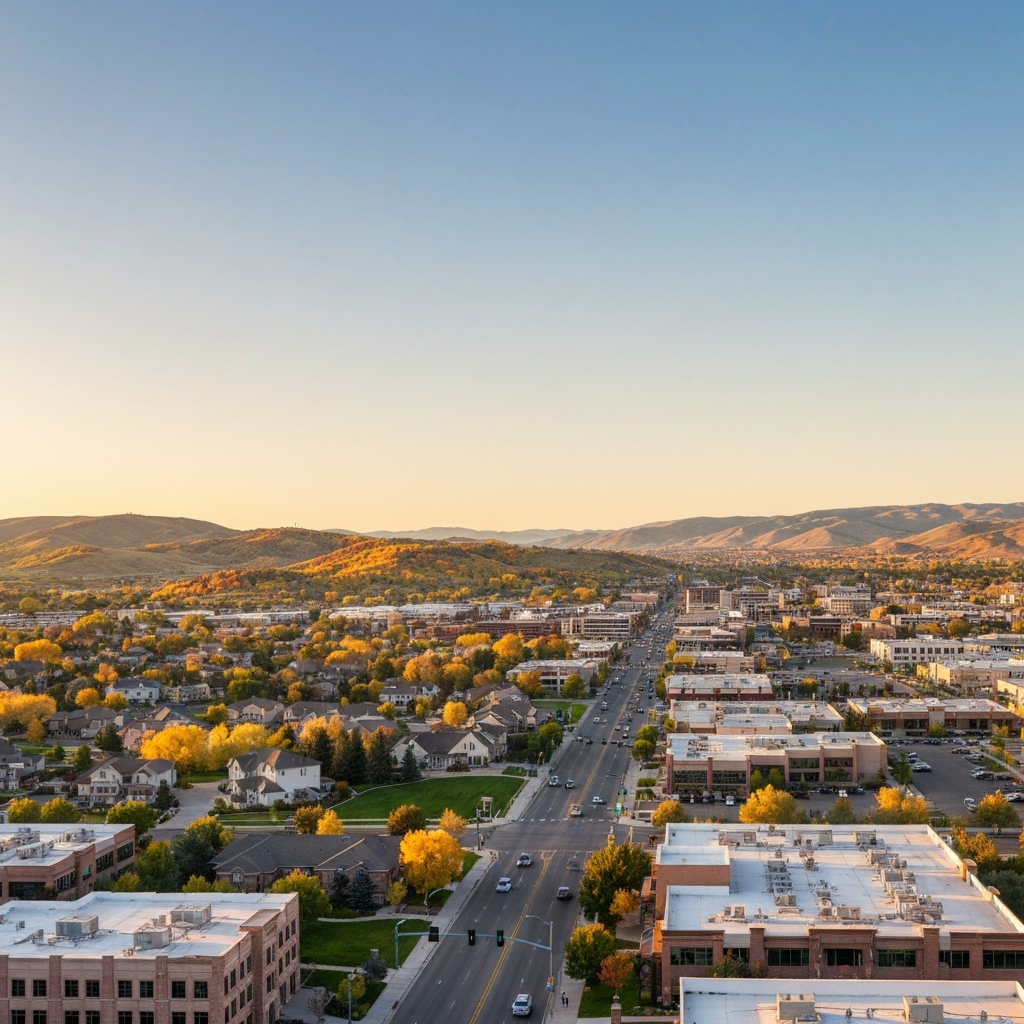
West Valley City, Utah, experiences a diverse climate characterized by distinct seasonal variations. Understanding these patterns is essential for residents to prepare and adapt accordingly.
Seasonal Climate Overview
Spring
Spring brings a welcome rise in temperatures, transitioning from average highs of 46.9°F (8.3°C) in March to 64°F (17.8°C) in May. This season is relatively dry, with average rainfall decreasing from 1.42 inches (36mm) in March and April to 0.75 inches (19mm) by May. Daylight hours extend from 12 hours in March to 14.5 hours in May, accompanied by an increased UV index.
Summer
Summers are warm and dry, with average high temperatures reaching 76.6°F (24.8°C) in June and peaking at 85.8°F (29.9°C) in July. Daylight extends up to 15.1 hours in June. This period is the driest, with rainfall as low as 0.35 inches (9mm) in June, increasing slightly to 0.51 inches (13mm) in August.
Autumn
Autumn sees a gradual temperature decline, with highs decreasing from 74.1°F (23.4°C) in September to 46.2°F (7.9°C) by November. Rainfall increases from 0.79 inches (20mm) in September to 0.94 inches (24mm) in November. Daylight hours reduce from 12.4 hours in September to 9.9 hours in November.
Winter
Winters are notably cold, with average high temperatures around 34.2°F (1.2°C) in December. The city experiences significant snowfall, averaging 8.15 inches (207mm) in December. Daylight is limited, with approximately 9.3 hours in December.
Environmental Initiatives
West Valley City is actively engaged in environmental sustainability. The city has committed to achieving net-zero emissions by 2030, focusing on energy efficiency, sustainable practices, and community involvement. Residents are encouraged to participate in programs such as recycling, stormwater management, and tree planting to contribute to these goals.
Additionally, the city addresses stormwater pollution by educating the public on preventing contaminants like trash, antifreeze, fertilizers, and pet waste from entering the storm drain system. These pollutants can adversely affect local water bodies, including Decker Lake and the Jordan River.
Understanding the local climate and participating in environmental initiatives are vital steps for residents to enhance the quality of life and sustainability in West Valley City.